
Research that informs our work

Both founders do research at the University of Hildesheim, among other things on chatbots, generative AI and social robots. Here you will find their publications.

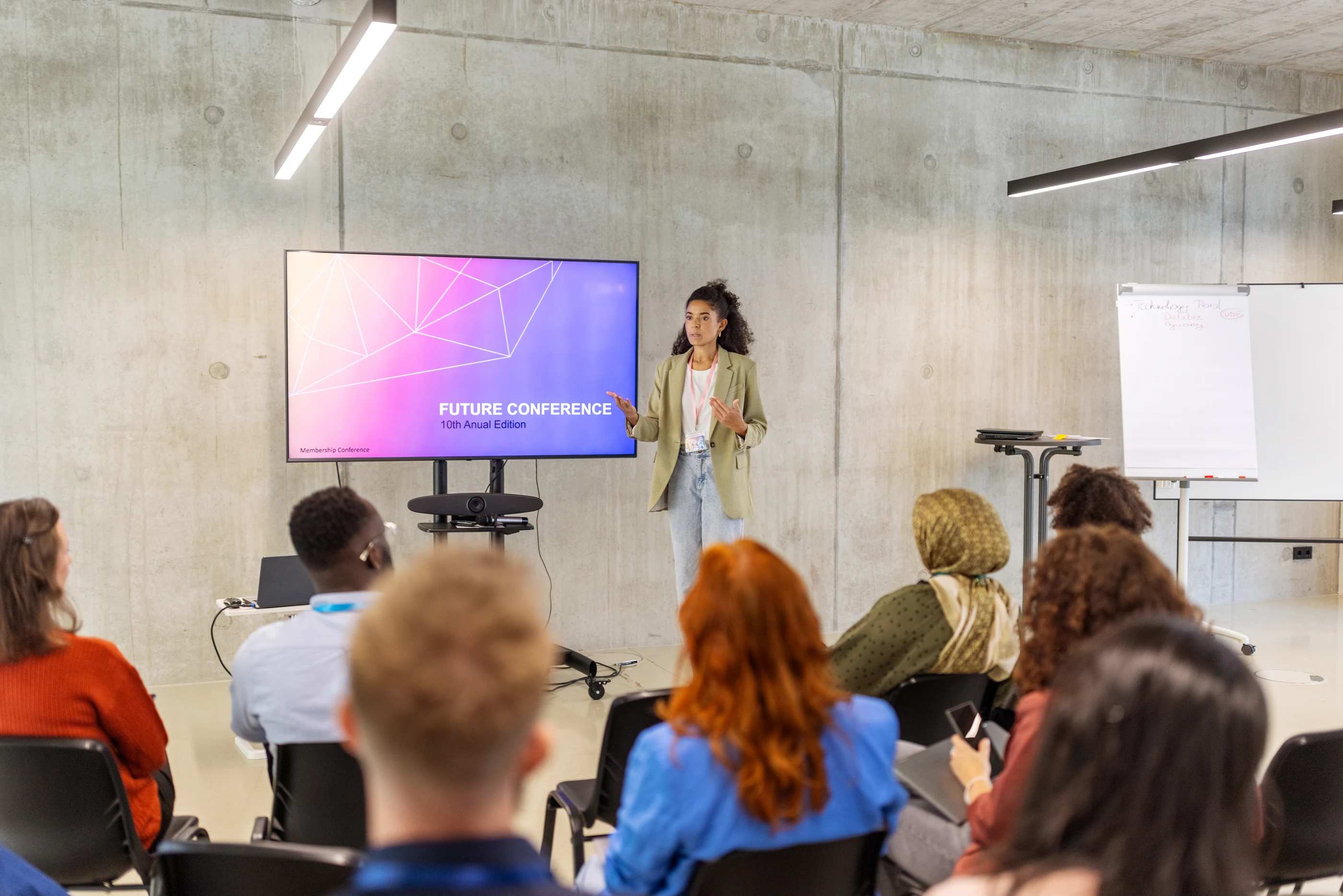
Speaker giving a talk to an audience at a professional conference

2026

  1. Designing Conversational Agents for Search String Development in Literature Reviews

    Daniel Bierschwale, Phillip O. Gottschewski-Meyer, Thorsten Schoormann, Ralf Knackstedt

    Communications of the Association for Information Systems 58

    Good search strings are the basis of every systematic literature review, yet early-career researchers in particular find them hard to build. Following a design science research approach, the authors develop STRINGI, a chatbot that guides users step by step through developing a search string. STRINGI implements 22 design features for search string development through prompt engineering, and the article describes how such features can be carried over into prompts systematically.

    DOI 10.17705/1CAIS.05840

  2. E-Guide-Entwicklung für das Lernen in Gruppen – inspiriert durch WOL™: Ein Zwischenbericht

    Ralf Knackstedt, Daniel Bierschwale, Paul-Ferdinand Steuck, Anne Meißner

    Innovative Hochschullehre auf dem digitalen Campus, Hildesheimer Universitätsschriften 44

    Working Out Loud™ is a training program from professional practice in which digital guides help managers build their networking skills. Earlier work at the University of Hildesheim shows that the approach also suits university teaching but needs to be adapted to it. The chapter reports on developing courses of their own based on it, presents a notation for planning them and gives recommendations that proved useful in a course on the basics of research methods.

    Link hilpub.uni-hildesheim.de/handle/ubhi/20040

  3. Einsatz von Sozialrobotern mit KI-Agenten in Wohnquartieren: Strukturierung des Forschungsfeldes

    Paul-Ferdinand Steuck, Daniel Bierschwale, Ralf Knackstedt

    HMD Praxis der Wirtschaftsinformatik

    Social robots can give AI agents a physical presence in residential neighborhoods. The article derives ten research perspectives for this field from five existing frameworks and has 43 experts from research and practice rate them in a real-time Delphi study. The result is a framework for researchers, the housing sector and neighborhood management.

    DOI 10.1365/s40702-026-01300-0

  4. Exploring Informal Caregivers’ Experiences with a Context-Sensitive Voice-Based AI Companion

    David Walter, Paul-Ferdinand Steuck, Ralf Knackstedt

    Human Aspects of IT for the Aged Population, HCII 2026, LNCS 16736

    Informal caregivers provide much of the long-term care and often struggle to get advice in time. The article evaluates an early prototype of an AI companion that users talk to by voice and that responds to their situation. Interviews with caregivers show how they rate its usefulness, clarity and emotional experience, and offer guidance for the human-centered design of such companions.

    DOI 10.1007/978-3-032-30424-7_24

  5. Konferenzwissen im Dialog: ein KI-Companion für wissenschaftliche Tagungen

    Paul-Ferdinand Steuck, Dominik Dau, Michael Clasen

    46. GIL-Jahrestagung 2026

    At scientific conferences, participants have to find the right contributions and network in little time, especially in a field as diverse as agriculture. Building on an evaluation of the conference companion GilGPT, the article develops an architecture of several AI agents in two design science research cycles. A test with 25 authors of the GIL conferences from 2023 to 2025 shows more accurate and more in-depth answers than before.

    DOI 10.18420/giljt2026_56

  6. LLMPT: A Template for Prompt Documentation in Scientific Publications

    Paul-Ferdinand Steuck, Daniel Bierschwale, Raphael Schmidt, Mohammad Shidujaman, Ralf Knackstedt

    Human-Computer Interaction, HCII 2026, LNCS 16703

    Research that uses generative AI should document its prompts, models and settings in a way others can follow. LLMPT is a template for this, developed from a systematic literature review and a review of common chat interfaces and open language models. It also records how prompts and model versions change over time and was evaluated in a focus group with researchers.

    DOI 10.1007/978-3-032-29596-5_12

  7. Mapping the Problem Spaces for Novice Researchers in Conducting Systematic Literature Reviews

    Daniel Bierschwale, Phillip Oliver Gottschewski-Meyer, David Walter, Ralf Knackstedt

    Hawaii International Conference on System Sciences, HICSS 2026

    Systematic literature reviews call for solid experience with the method and the subject area, and early-career researchers in particular often feel overwhelmed. Based on interviews with them, the article identifies 17 problem areas that arise in such a review, especially in building the search string and in the first screening of results. The findings lay the groundwork for targeted support and help to spot difficulties as early as the planning stage.

    DOI 10.24251/hicss.2026.626

  8. On Selecting Chatbots Utilized by Small and Medium-Sized Enterprises: Evaluation of a New Taxonomy-Based Selection Metric for Generative AI Based on a Think-Aloud Study with Decision-Makers

    Firas Adleh, Niklas Kruse, Michael Rau, Paul-Ferdinand Steuck, Julius Schöning, Ralf Knackstedt

    IEEE International Conference on Human-Machine Systems, ICHMS 2026

    Small and medium-sized enterprises find it hard to pick the right one among the many chatbots based on generative AI. The article develops a taxonomy that organizes the features of such chatbots and tests it with decision-makers from these companies: in a think-aloud study, they looked for a solution to given business scenarios once with the taxonomy and once with a regular web search. The findings inform the design of decision aids that link technical features to business value.

    DOI 10.1109/ICHMS69701.2026.11602383

  9. Toward a Multi-Agent Architecture for GenAI-Powered Conference Companions

    Dominik Dau, Paul-Ferdinand Steuck, Maylin Wartenberg, Ralf Knackstedt

    Artificial Intelligence in HCI, HCII 2026, LNAI 16744

    At scientific conferences, participants have to piece together information from proceedings, schedules and programs under time pressure. From two design science research cycles, the article derives seven recurring information needs and an architecture for AI companions: a central agent routes questions to specialized agents, each drawing on its own data sources. The architecture is not tied to any particular technology and serves as a blueprint for one's own implementations.

    DOI 10.1007/978-3-032-30860-3_15

2025

  1. Configurations of Digital Choice Environments: Shaping Awareness of the Impact of Context on Choices

    Phillip Oliver Gottschewski-Meyer, Fabian Lang, Paul-Ferdinand Steuck, Marco Di Maria, Thorsten Schoormann, Ralf Knackstedt

    Wirtschaftsinformatik 2025

    How the design of a digital choice environment such as an online shop affects what people choose has hardly been studied. The article examines whether the presence, position and perception of its components change choices and the effect of nudges. An online experiment with 421 participants in a fictional shop with six variants shows above all that the presence and position of the components shape decisions.

    Link hilpub.uni-hildesheim.de/handle/ubhi/19887

  2. Designing an AI companion to support informal caregivers in role transition: insights from a design science approach

    David Walter, Jennifer Pengel, Paul-Ferdinand Steuck, Marco Di Maria, Ralf Knackstedt, Anne Meissner

    BMC Nursing 24

    Many informal caregivers take a long time to recognize that they are providing care, and so find support late. The study develops an AI chatbot that helps them recognize their role, reflect on their situation and find suitable support. Interviews and think-aloud sessions with caregivers lead to seven initial design principles for such chatbots.

    DOI 10.1186/s12912-025-03868-2

  3. Designing Anthropomorphic Conversational Agents to Enhance Laypeople’s Acceptance of Generative AI

    Paul-Ferdinand Steuck, Marco Di Maria, Daniel Bierschwale, Phillip Oliver Gottschewski-Meyer, Ralf Knackstedt

    Artificial Intelligence in HCI, HCII 2025, LNAI 15820

    Many people hesitate to use generative AI because it is unfamiliar to them. Drawing on four projects with human-like chatbots, the article shows that cues such as a persona, a conversational style, emoticons or short pauses before replying make it easier to get started. From this, the authors derive five design principles for chatbots that adapt as their users gain experience.

    DOI 10.1007/978-3-031-93415-5_17

  4. May I Speak to the Driver? Exploring Design Principles for a Virtual In-Vehicle Assistance System Applied in Road-Based Autonomous Public Transport

    Johannes Staritz, Phillip Oliver Gottschewski-Meyer, Paul-Ferdinand Steuck, Amilia Fröhlich, Timo Strohmann, Maylin Wartenberg

    European Conference on Information Systems, ECIS 2025

    Autonomous vehicles could strengthen public transport, but without staff on board, passengers have no one to turn to. The article looks at virtual in-vehicle assistants that take on this role. A workshop with experts, a systematic literature review and five think-aloud sessions lead to design principles for such assistants.

    Link aisel.aisnet.org/ecis2025/hci/hci/1/

  5. Rethinking Digital Reading Support: Designing GenAI Companions for Unlearning Ineffective Reading Patterns

    Marco Di Maria, Paul-Ferdinand Steuck, Bijan Khosrawi-Rad, Daniel Bierschwale

    INFORMATIK 2025, LNI P-366

    Many students read academic texts the way they read everyday texts and understand them less well as a result. The article presents a virtual companion based on generative AI that helps them recognize, question and drop such reading patterns. It was developed following a design science research approach and evaluated twice with students from different backgrounds.

    DOI 10.18420/inf2025_94

  6. Towards GilGPT: an anthropomorphic conversational agent for accessible communication of agricultural research to farmers

    Dominik Dau, Paul-Ferdinand Steuck

    45. GIL-Jahrestagung 2025, LNI P-358

    Agricultural research produces many studies but few accessible summaries for practitioners. The article introduces GilGPT, a human-like chatbot based on a language model that uses retrieval-augmented generation to draw on a collection of scientific publications. Avatars and adaptive language are meant to make the findings easier for farmers to access and to bring research and practice into conversation.

    DOI 10.18420/giljt2025_19

  7. Towards Tool Support for Design Science Research Understanding of Novice Researchers

    Daniel Bierschwale, Phillip Oliver Gottschewski-Meyer, Paul-Ferdinand Steuck, Ralf Knackstedt

    Learning and Collaboration Technologies, HCII 2025, LNCS 15807

    Design science research is a demanding method, and early-career researchers can easily lose track of the many possible approaches. The article derives design principles from the literature for a chatbot based on generative AI that helps them understand the method. A prototype was evaluated with seven early-career researchers in think-aloud sessions and interviews.

    DOI 10.1007/978-3-031-93567-1_3

2024

  1. From Hidden Care to Being Aware: Designing a Conversational Agent to Support Informal Caregivers in Seeking Assistance During Role Transition

    David Walter, Paul-Ferdinand Steuck, Marco Di Maria, Ralf Knackstedt

    INFORMATIK 2024, LNI P-352

    Many informal caregivers grow into their role gradually without recognizing it as such, and so do not seek help. The article presents an AI-based chatbot that supports them in taking on the caregiving role and points them to suitable support services. It was developed following a design science research approach and combines insights from nursing science with unlearning outdated beliefs about roles.

    DOI 10.18420/inf2024_67

  2. Questionnaires in Design Science Research—A Systematic Overview

    Paul Steuck, Phillip Oliver Gottschewski-Meyer, Daniel Bierschwale, Ralf Knackstedt

    Wirtschaftsinformatik 2024, LNISO 84

    Collecting data in a design science project, for example through surveys, focus groups or Delphi studies, calls for suitable questionnaires and constructs. Early-career researchers in particular struggle with the wide choice, and a poor pick can put a whole project at risk. The article gives a systematic overview of the questionnaires and constructs used in such projects, with data visualizations, an interactive model and a database of questionnaires.

    DOI 10.1007/978-3-032-08486-6_25

2023

  1. Auf dem Weg zu einer Kompetenz des Verlernens: Öffentliche Verwaltung für die Digitalisierung stärken

    Marco Di Maria, Daniel Bierschwale, Paul-Ferdinand Steuck, Ralf Knackstedt

    Rechts- und Verwaltungsinformatik, RVI 2023, LNI P-341

    As administration goes digital, knowledge in the public sector becomes outdated ever faster, and familiar ways of working no longer fit new tasks and technologies. The article defines a competence of unlearning, examines existing e-government competence models for it and refines the definition in interviews with six public employees. Recommendations show how staff can build this competence in practice.

    DOI 10.18420/rvi2023-016

  2. Entwicklung einer Prozessmodellierungssprache zur Unterstützung bei datenschutzrechtlicher Dokumentation

    Daniel Bierschwale, Paul-Ferdinand Steuck, Ralf Knackstedt

    Rechts- und Verwaltungsinformatik, RVI 2023, LNI P-341

    The GDPR requires organizations to document every process that handles personal data, which takes a lot of time in practice. The article develops a process modeling language that makes it easier to gather the information needed. It builds on a real-time Delphi study with experts and a systematic literature review and closes with an evaluation of the language.

    DOI 10.18420/rvi2023-009

  3. Mitigating Educational Challenges Through Unlearning

    Marco Di Maria, David Walter, Paul-Ferdinand Steuck, Ralf Knackstedt

    Bildungstechnologien, DELFI 2023, LNI P-338

    Knowledge grows quickly and becomes outdated just as quickly, which unsettles everyone who learns, teaches or provides technology at universities. From a socio-technical perspective, the position paper explores what unlearning, the deliberate discarding of outdated assumptions and practices, can contribute to meeting challenges in teaching and learning, and names key problem areas for further discussion.

    DOI 10.18420/delfi2023-38

From study to business

Wondering what a finding means for your company? In an intro call we work out how it carries over to the way you work.

Book an intro call